
Do I Need a Survey When Buying a House?
If you’re in the process of buying a property, you’ve probably asked yourself this at some point:
“Do I actually need a survey… or is it just another cost?”
It’s a fair question, especially when you’re already juggling legal fees, mortgage costs and everything else that comes with moving.
But the reality is, a survey is one of the few things in the process that is purely there to protect you.
What a survey actually does (and what it doesn’t)
A survey is an independent inspection of the property’s condition, carried out on your behalf.
It’s there to highlight:
Defects you might not have noticed
- Areas that could require repair
- Ongoing maintenance considerations
- Potential legal risks before you commit
It’s important to say, it’s not invasive. We don’t lift floors or open up walls. But with experience, you can pick up a lot from what is visible.
“But I’m already getting a mortgage valuation…”
This is where a lot of buyers get caught out.
A mortgage valuation is for the lender. It’s there to confirm the property is suitable security for the loan, not to give you a detailed understanding of its condition.
In many cases, it’s:
- Very brief
- Limited in scope
- Sometimes even desktop-based
So whilst it might confirm the value, it won’t tell you if the roof is nearing the end of its life or if there are signs of damp internally.
What we typically see on surveys
Even properties that look well presented can have underlying issues.
Some of the more common things I come across across Leicestershire, Derbyshire, Staffordshire and the wider Midlands include:
- Early signs of damp or condensation
- Roof coverings starting to deteriorate
- Poorly carried out alterations or extensions
- Faulty window and door units
- General maintenance that’s been overlooked
None of these are unusual, but they can be more expensive than expected and, more importantly, may lead to unexpected costs if not picked up early.

What happens if you don’t get one?
Sometimes, everything is absolutely fine. But when it’s not, it can be expensive.
I’ve spoken to buyers who only discovered issues after moving in, things that could have been identified beforehand and used to:
- Renegotiate the purchase price
- Plan works properly
- Or simply make a more informed decision
A survey isn’t about scaremongering or negatively impacting the sale, it’s about removing uncertainty.
Choosing the right type of survey
The two most common options are:
Level 2 Survey
Generally suited to more conventional properties in reasonable condition.
Level 3 Survey
More detailed, and usually recommended for:
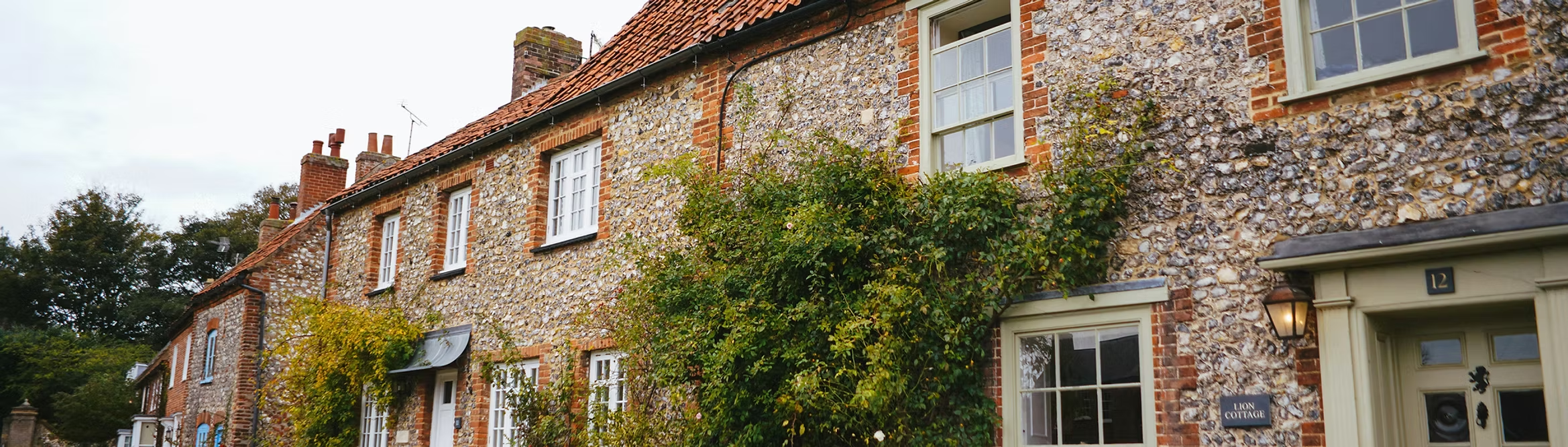
- Older properties
- Properties that have been extended
- Homes with visible issues
- Non-standard construction
If you’re unsure, this is something we always guide clients on, to ensure you are choosing the most appropriate level survey for your prospective purchase property.
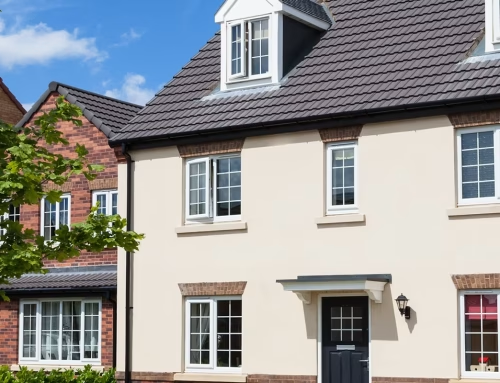
What about newer properties?
Even with newer homes, issues can still arise.
Things like:
- Finishing defects
- Poor workmanship
- Ventilation issues
A survey can still be worthwhile, even if it’s just for peace of mind.
Final thoughts
Buying a property is a big decision, and it’s easy to focus on how it looks during a viewing. But a survey helps you understand what’s going on beneath the surface. It gives you clarity, confidence, and the ability to move forward knowing exactly what you’re taking on.
Need some advice?
If you’re buying in the Midlands and not sure which survey is right for you, we’re always happy to help at Real Surveying.
No pressure, just honest, straightforward advice.




Leave A Comment